Artist stories
Joy: making room for a childlike sense of freedom
An empty swing, a mountain landscape and the freedom to pause. Explore the artist’s intention behind Joy, an original painting by S. Saima Afia.
Qurbart Studio · 1 November 2026 · 3 min read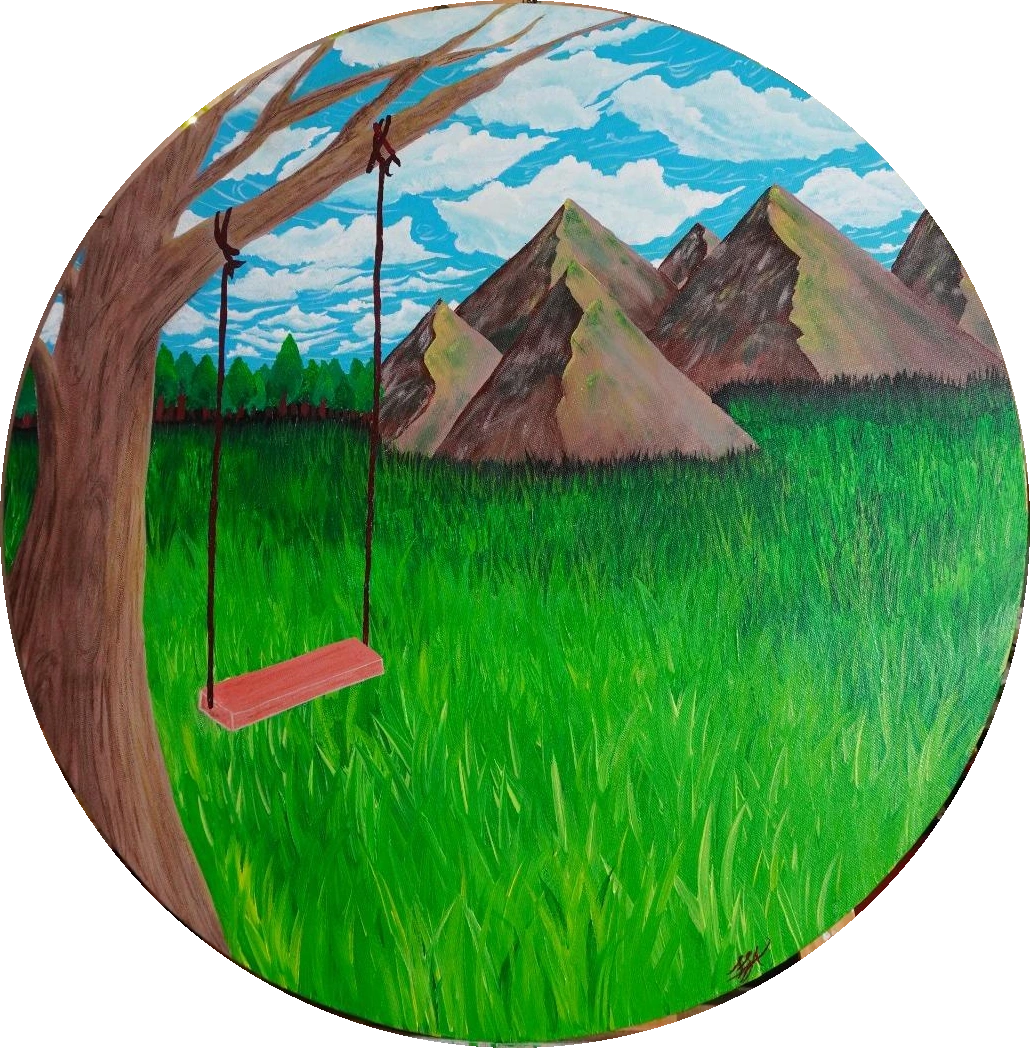
A landscape with room to breathe
Joy brings together mountains, a meadow and an empty swing. These are simple things to name, but naming them is only the beginning of looking at the painting. There is also the space between them: the distance of the landscape, the quiet around the swing, and the possibility of imagining someone taking a moment to be there.
In the artist’s statement, S. Saima Afia connects Joy to a sense of freedom. She describes a human wish to keep the heart of a child and enjoy serene places where there is room to breathe and swing peacefully. That statement gives the painting a clear starting point. Its subject is not only an outdoor scene, but a way of being within one.
Why an empty swing can hold attention
An empty swing leaves an action unfinished. Someone could sit there, someone could set it moving, or it could remain still. When looking at Joy, that openness is worth noticing. Rather than assigning the swing a new story, return to what the artist has actually said: freedom, a childlike heart, and the pleasure of peaceful surroundings.
There is no need to decide immediately what the scene should mean for you. You can look first at the visible relationships. Where does the swing sit in relation to the mountains? How much of the landscape feels close, and how much feels distant? Questions like these encourage attention to the painting before turning it into an explanation.
Childlike does not have to mean hurried
The freedom described in Joy is linked to enjoyment and peaceful movement. A swing suggests a rhythm that can be repeated without needing to arrive anywhere. In the context of the artist’s statement, that makes a useful distinction: the painting holds the possibility of activity alongside the permission to be at ease.
For a viewer, the idea of a childlike heart may bring associations of their own. Those associations belong to the viewer; they should not be mistaken for an account of the artist’s childhood or a place she visited. The published statement does not need an invented memory attached to it. Its words and the visible work already offer enough to begin a thoughtful encounter.
Spending time with a work before choosing it
If Joy draws your attention, look at its photographs more than once. Start with the overall composition, then move towards the details that keep calling you back. The gallery and the shop listing offer different ways to spend time with the same original work. A slower look can help you describe what interests you, whether or not you have collected a painting before.
You might begin a conversation with a straightforward observation: the openness of the landscape, the quiet of the scene, or the swing itself. You do not need specialist language to ask about a painting. A specific question is often a better starting point than trying to find the right art-world term for a feeling.
Choosing a work can also be a chance to ask what you would like to live with over time. In Joy, the artist has offered an image and a statement about freedom. The next part of the encounter belongs to the person looking. Returning to the work, rather than rushing towards a conclusion, gives that encounter a little room to grow.
Sources & editorial note
Prepared by Qurbart Studio with AI assistance, grounded in the sources below. Artist statements belong to S. Saima Afia. Editorial text is not a personal statement from the artist.
Joy: Qurbart’s original painting listingQurbart gallery and artist statements