Looking closely
How to Critique a Painting Beyond Saying You Like It
Critiquing art is a disciplined practice that moves beyond surface admiration. By observing line, light, balance and intent, you can articulate a thoughtful response. This guide shows how to describe, interpret, counterpoint and justify, using Saima Afia’s “Shine” as a contemporary illustration.
Qurbart Studio · 2 November 2026 · 3 min read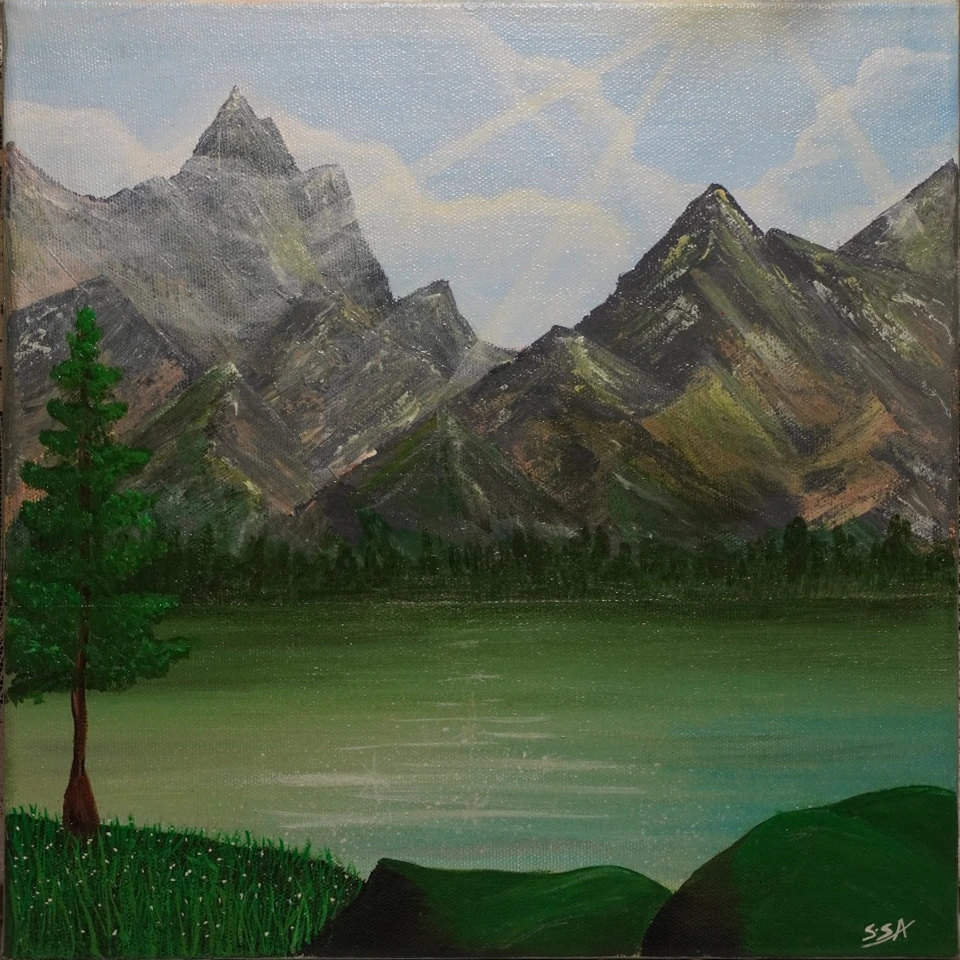
Start with the Question
Critiquing a painting begins with the question, “What can I say about this work that goes beyond ‘I like it’?” The answer demands a framework: description, interpretation, counterpoint, and justification. This structure turns observation into argument and keeps the critique grounded in the visual evidence rather than emotion alone.
By framing the critique as a dialogue, you invite the viewer to see the painting through a new lens. The first step is to gather facts—what you see—before moving into meaning. This disciplined approach prevents the critique from becoming a vague compliment and instead becomes a meaningful conversation about art.
Describe the Visible Choices
Description is the foundation. Note the line, shape, form, space, colour and texture that the artist uses. In “Shine,” the visible sunrays cut through cloud‑filled sky, creating sharp, linear strokes that contrast with the soft, diffused greens of the surrounding mountains. The water surface is rendered with a bright, dancing sparkle that breaks the usual reflective pattern.
The Getty resource on Elements of Art reminds us that a depicted surface and a physical surface are not automatically the same. Here, the artist’s choice to let light pierce the clouds and illuminate the lake creates a dynamic surface that feels almost tangible. Recording these details provides a concrete basis for later interpretation.
Interpret the Artist’s Intent
Interpretation asks, “Why did the artist make these choices?” Saima Afia states that “Shine” captures a landscape that belongs to nowhere and everywhere at once, focusing on a single, brilliant moment of light. The intent is to evoke peace and quiet beauty rather than a specific location.
This interpretation aligns with the observed light and sparkle. The dramatic illumination directs the viewer’s eye toward the lake, suggesting a moment of calm. By linking the artist’s statement to the visible evidence, you create a coherent narrative that respects both intention and observation.
Consider a Counterpoint
A fair critique includes a counterpoint—an alternative reading or a limitation. One might argue that the painting’s reliance on a single light source could feel too uniform, potentially reducing depth in the background. This observation does not negate the work’s beauty but invites a deeper look at spatial depth and contrast.
Such counterpoints encourage critical thinking. They remind us that every choice has trade‑offs; the emphasis on light may sacrifice subtlety in shadow. Acknowledging this limitation strengthens the critique by showing that you are evaluating the work on multiple criteria, not just emotional response.
Support Your Judgment with Evidence
Justification turns observation into a reasoned opinion. In “Shine,” the use of bright, linear sunrays against a muted green backdrop creates a clear emphasis that draws the eye to the lake. The balance between light and shadow demonstrates effective use of contrast, a principle highlighted in Getty’s Principles of Design.
By citing these visible elements, you provide evidence for your judgment. The painting’s intention to evoke calm is supported by the harmonious interplay of light and color, making the critique grounded in the work itself rather than subjective taste.
Apply the Method Practically
Try this exercise: pick a painting, note three visible elements, state the artist’s intent (if known), suggest one counterpoint, and then justify your overall impression with specific evidence. Repeat with different works to refine your eye for detail and argument structure.
This routine turns critique into a skill. Over time, you’ll notice patterns in how artists use line, color, and composition to convey meaning, and you’ll be able to articulate those patterns confidently. The method also helps you appreciate the complexity of art beyond surface admiration.
Sources & editorial note
Prepared by Qurbart Studio with AI assistance, grounded in the sources below. Artist statements belong to S. Saima Afia. Editorial text is not a personal statement from the artist.
Getty: Elements of ArtGetty: Principles of Design